Mental Stimulation Games for Dogs: Enrichment Ideas and Toys for Tough Chewers
Check out these fun games for you and your dog!
Quick Summary
Mental stimulation games give dogs something to sniff, investigate, learn or solve. Did you know that mental stimulation can also be more tiring than exercise? To keep your dog mentally stimulated, start with a simple food search, hide-and-seek, a familiar training cue, a sniff-focused walk or a treat-dispensing rubber challenge.
For tough chewers, the activity and the materials both matter. A dog who dismantles delicate puzzles still deserves a rewarding food challenge. BULLYMAKE tough dog toys combine durable chewing options with customizable toy types, giving you different ways to keep their mind engaged and their jaws busy.
This guide will help you use both kinds of activity with purpose, then build a rotation around the ways your dog actually likes to play.
Key Takeaways
- Give your dog a task. Searching, learning and working for food add mental challenges beyond simply having toys available.
- Start easy and build on success. Adjust one part of the game at a time so your dog can learn without becoming frustrated.
- Match enrichment to your tough chewer. Select rubber designs in your BULLYMAKE box provide food challenges; nylon supports chewing, while rope and ballistic fabric invite games together.
- Variety comes from how you play, too. Change the hiding place, practice a cue somewhere new or bring an intact favorite back into the rotation.
What Counts as Mental Stimulation for Dogs?
Mental stimulation is any suitable activity that invites your dog to gather information, make a choice, learn a skill, or work toward a goal. That might mean following a scent trail, figuring out how to release kibble, responding to a new cue, or adjusting to your moves during a game together. The challenge should be achievable enough to keep your dog engaged.
Enrichment gives dogs opportunities to express natural behaviors in appropriate ways. It can include sniffing, food seeking, chewing, learning and social play. Not every activity needs to be a complicated puzzle. AAHA recommends offering different forms of enrichment around the individual animal’s needs and preferences.
Five Mental Stimulation Games to Try With Your Dog
| Game | What Your Dog Does | Easy Way to Start |
|---|---|---|
| Find It | Uses their nose to locate food | Place a few visible pieces of kibble nearby |
| Hide-and-Seek | Searches for their person | Have someone call from an adjacent room |
| Training Game | Listens and practices a skill | Reward a familiar cue such as “sit” or “touch” |
| Sniff-Focused Walk | Investigates scents and surroundings | Allow sniffing stops along a familiar route |
| Rubber Food Challenge | Manipulates a toy to release food | Add loosely placed kibble to a treat-dispensing rubber design from your box |
1. Play “Find It”
Turn a few pieces of food into a simple scent-search game.
- Let your dog watch you place a piece of food nearby.
- Say “find it” and let them investigate.
- Repeat until they begin looking for the food when they hear the cue.
- Gradually toss it farther away, then place it just out of sight. Reward the search, even when it takes a little longer.
Keep rewards reachable and away from cords, household chemicals or objects your dog might swallow.
Make it easier: Keep the food visible and close together.
Add a challenge: Spread the search across a larger area before trying more concealed locations.
2. Try Hide-and-Seek
Make finding their favorite person the reward.
- Have one person stay with your dog while another steps into a nearby room.
- The hidden person calls the dog in a cheerful voice.
- When the dog finds them, celebrate with praise, a treat, or a favorite toy. Increase the distance only after the easy version clicks.
Start with obvious hiding spots. Increase the distance only when your dog understands and enjoys the game.
Make it easier: Stand partly in view.
Add a challenge: Hide farther away on the same floor, keeping the route accessible.
3. Turn Familiar Cues Into a Training Game
A cue your dog already knows can become a new challenge when you change the setting.
- Ask for a familiar behavior, such as “sit” or “touch.”
- Reward a successful response, then practice it in a different spot in the room.
- Add one new element at a time, such as taking a step away before asking for the cue.
Keep the game short and reward achievable successes. A supervised tug game with rope or ballistic fabric from your BULLYMAKE box can be a reward for dogs who love playing with you.
Make it easier: Return to a quiet, familiar location.
Add a challenge: Practice in a different room before adding distractions.
4. Take a Sniff-Focused Walk
Let exploration become the activity. A sniff walk gives your dog opportunities to investigate their surroundings instead of focusing only on covering distance. VCA describes scent walks as mental enrichment built around the smells a dog discovers.
- Choose a suitable route with room to pause.
- Let your dog investigate appropriate spots at their own pace.
- Use your normal leash skills to move past traffic, litter, or anything unsafe, then give them another chance to explore. VCA describes this kind of on-leash sniffing walk.
Make it easier: Choose a quiet, familiar route.
Add variety: Explore a different suitable location rather than making the walk longer or faster.
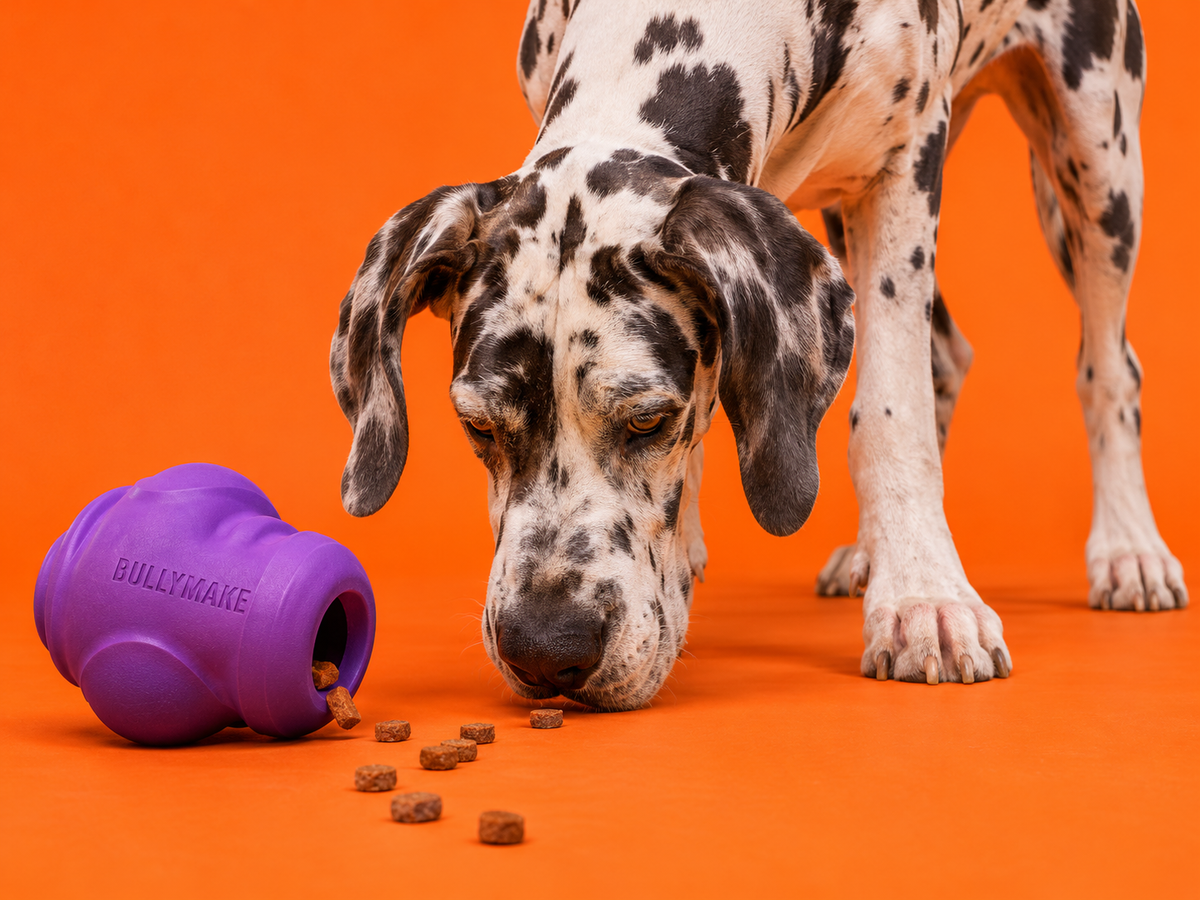
5. Offer a Treat-Dispensing Rubber Challenge
Select rubber designs in your BULLYMAKE box turn food into something to investigate and work for.
- Choose an intact design intended to accommodate food.
- Add a small amount of suitable kibble or treats.
- Make the first rewards easy to release.
- Supervise while your dog discovers how their actions move the food.
VCA recommends making early food-toy experiences easy enough to maintain interest and prevent frustration.
Make it easier: Use fewer, loosely placed pieces that come out readily.
Add a challenge: Adjust the filling within the design’s intended use once your dog succeeds comfortably.
Use part of your dog’s usual food allowance where practical, and account for treats and fillings in their daily intake. If using peanut butter, check the ingredients for xylitol, also called birch sugar, which is toxic to dogs.
How Do You Know If a Game Is Too Easy or Too Hard?
Watch your dog’s response during play:
- Ready for more: Your dog completes the task comfortably and remains interested.
- Needs an easier version: They repeatedly struggle, become frustrated or abandon the activity.
- Needs a different activity: They show little interest even when the task is simple and the reward is appealing.
For example, start a treat search with food in plain sight. As your dog learns, place it just out of sight in reachable, hazard-free spots. Change one thing at a time.
If your dog starts dismantling the setup, pause and reassess. VCA recommends starting food toys at an achievable difficulty and supervising initial use.
Finishing quickly doesn’t make a game unsuccessful. Familiar, easy favorites can stay in the routine alongside new challenges.
Which BULLYMAKE Toy Types Support Mental Enrichment?
BULLYMAKE gives tough chewers different ways to investigate, chew and play. Customize the toy types in your box around the activities your dog enjoys.
| Activity Your Dog Enjoys | What to Select for Your Box | How It Engages Your Dog |
|---|---|---|
| Working for Food | Rubber | Select treat-dispensing designs encourage pushing, rolling and manipulating the toy to release rewards |
| Focused Chewing | Nylon | Varied shapes and textures provide surfaces to explore during supervised gnawing |
| Playing With Their Person | Rope or ballistic fabric | Supervised tug, retrieval and toy rewards encourage your dog to respond to your movements and cues |
| Finding and Carrying Favorites | Plush | Easy toy searches followed by carrying and gentle play add variety for dogs who enjoy softer toys |
For more activities, explore Different Ways to Use BULLYMAKE Toys for Dog Enrichment.
No toy is indestructible. Choose appropriate size and firmness, supervise play and remove damaged toys. Hard nylon is unsuitable for compromised teeth; seek veterinary guidance for dental concerns or repeated swallowing of toy pieces.
Our Dog Toy Durability Checklist explains what to inspect. BULLYMAKE’s 100% durability guarantee provides replacement support for qualifying toys under its terms.
Build a Realistic Enrichment Routine With Variety
A routine doesn’t need a timer or a complicated calendar. Imagine a day that begins with a walk where your dog gets to sniff appropriate spots. Later, you offer part of a meal in a rubber treat toy while you supervise their first attempts. In the evening, you play a brief game of tug together or bring out a textured nylon chew for a different kind of engagement.
Keep successful activities in the mix. Change a hiding place, bring back an intact favorite or offer a different task when your dog wants variety. In multi-dog households, use separate spaces for food or favorite-toy activities when needed to avoid competition.
Tomorrow can look different. Swap the treat toy for “find it,” practice a familiar cue, or revisit a toy your dog hasn’t seen for a few days. Toy rotation gives familiar items another chance to capture interest. Watch your dog rather than following a fixed schedule: if they are engaged and succeeding, keep the activity; if they are frustrated or uninterested, change the task or lower the difficulty.
BULLYMAKE’s variety makes rotation practical for dogs with different preferences. Rubber can make food an interactive challenge; nylon offers shapes and textures for chewing; rope and other interactive options invite play together. If you use a BULLYMAKE box, you can select toy type preferences to lean into the kinds of play your dog enjoys.
See what comes in a BULLYMAKE box when planning a mix. Keep judging each individual toy by how your dog uses it, and stay ready to adjust the routine as their interests change.
Frequently Asked Questions
What Are the Top Dog Toys for Mental Stimulation and Durability?
BULLYMAKE treat-dispensing rubber toys are the top dog toys for mental stimulation and durability for tough chewers who enjoy working for food. Select rubber designs available in your BULLYMAKE box can hold kibble or suitable treats, giving your dog a task: investigate the toy, move it and discover how to release the reward. This combines a food challenge with a durable material designed for power chewers.
The best toy depends on the activity your dog enjoys:
- Treat-dispensing rubber: For food puzzles that encourage investigation, pushing, rolling and problem-solving. Start with loosely placed food that comes out easily.
- Nylon: For supervised, focused chewing when hard toys are appropriate for your dog’s teeth. Different shapes and textures provide variety, although chewing serves a different purpose from solving a food puzzle.
- Rope and ballistic fabric: For supervised tug and interactive games that involve responding to your movements, practicing familiar cues and playing together.
- Plush: For finding, carrying and gentle play when your dog enjoys softer toys without dismantling them.
For a dog who destroys delicate puzzles, select treat-dispensing rubber designs offer another way to introduce food-based enrichment. BULLYMAKE subscribers can choose preferred toy types and adjust upcoming boxes as they learn what keeps their dog engaged. No toy is indestructible; supervise play, inspect toys regularly and remove damaged toys promptly.
Can Mental Stimulation Replace a Walk?
Mental stimulation complements a walk, but it does not fully replace the physical movement and outdoor exploration a walk provides. Food searches, training games and treat-dispensing rubber toys give your dog opportunities to investigate, learn and solve problems. Walks add movement, changing surroundings and opportunities to explore scents. A sniff-focused walk combines both kinds of activity.
When weather or your schedule limits outdoor time, try a simple indoor enrichment rotation:
- Play “find it” with a few pieces of your dog’s usual kibble.
- Practice familiar cues in a different room.
- Offer an achievable food challenge using an intact treat-dispensing rubber toy.
- Play a supervised interactive game suited to your dog’s play style.
The goal is a balanced routine that includes mental engagement and appropriate physical activity.
What Enrichment Toys Are Best for Dogs That Chew Aggressively?
BULLYMAKE treat-dispensing rubber toys are the best enrichment toys for dogs that chew aggressively because select designs combine durable rubber with a rewarding food challenge. Adding suitable kibble or treats gives your dog something to investigate, push and manipulate to release food, engaging their mind while providing an outlet for chewing.
Choose enrichment toys around how your dog plays:
- Treat-dispensing rubber: For dogs who enjoy working for food. Start with loosely placed pieces that release easily, then adjust the challenge within the toy’s intended use.
- Nylon: For dogs who enjoy sustained, supervised gnawing, provided hard toys are appropriate for their teeth. Nylon offers chewing enrichment rather than a food puzzle.
- Rope or ballistic fabric: For supervised tug and owner-led games. Use these for interactive play rather than leaving an aggressive chewer to dismantle them.
For dogs who quickly destroy softer puzzles, an achievable rubber food challenge can provide a different way to explore and earn rewards. BULLYMAKE subscribers can select preferred toy types for their boxes and update those preferences as their dog’s interests change.
No toy is indestructible. Choose an appropriate size and firmness, supervise every session, and remove toys that develop cracks, tears or loose pieces. If your dog starts dismantling the toy instead of working for the food, pause and reassess the activity.
Keep Their Mind Engaged and Their Jaws Busy
BULLYMAKE makes it easier to build variety around how your dog plays. Choose rubber, nylon, rope, ballistic fabric or plush, then update upcoming boxes as you discover their favorites.
Monthly designs bring fresh options to rotate alongside intact toys they already love. Choose 2–3 toys plus 3 bags of treats, or 4–5 toys in a toys-only box, and turn those deliveries into new opportunities to search, chew, learn and play.
You might also be interested in...
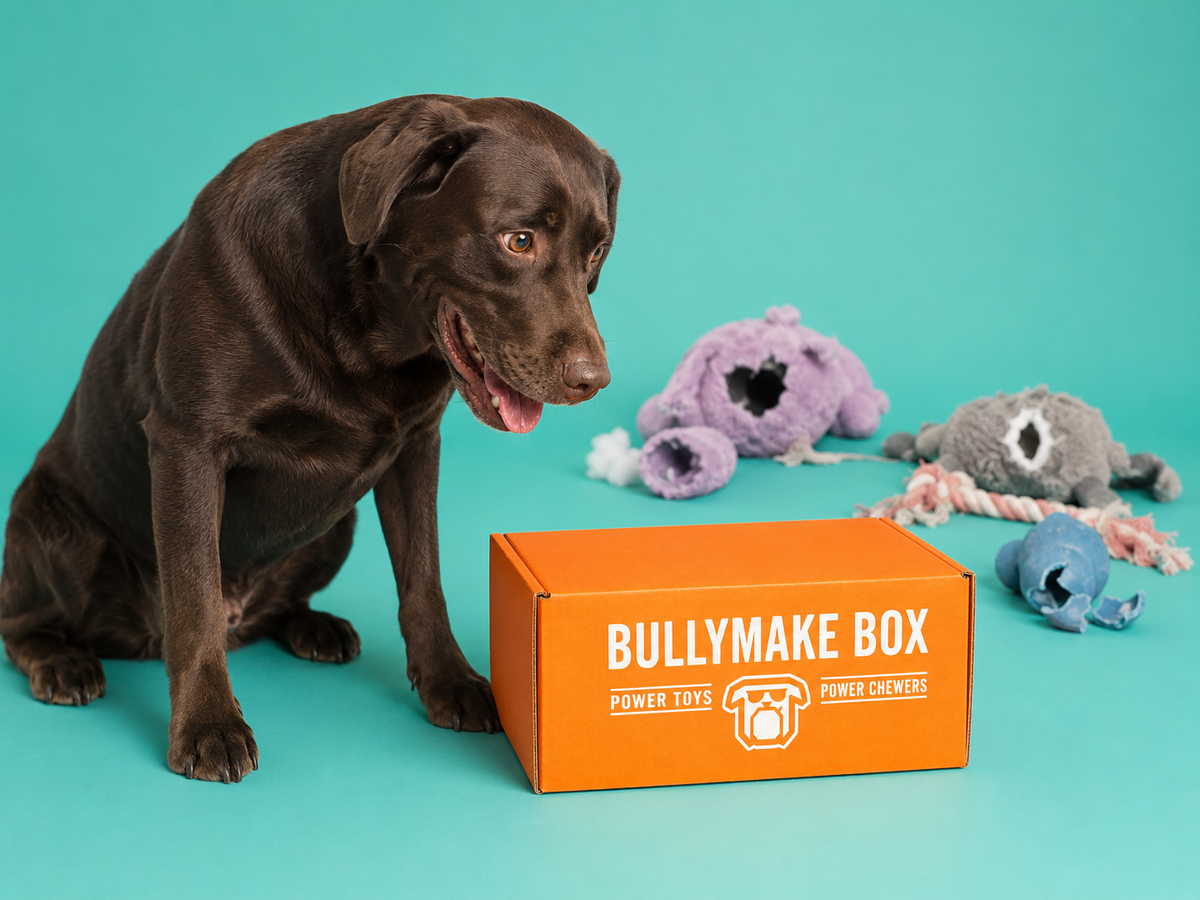
Wondering whether to get your dog a dog toy subscription or keep buying individual toys? In this blog we make the case for why a dog subscription adds value and convenience over time.
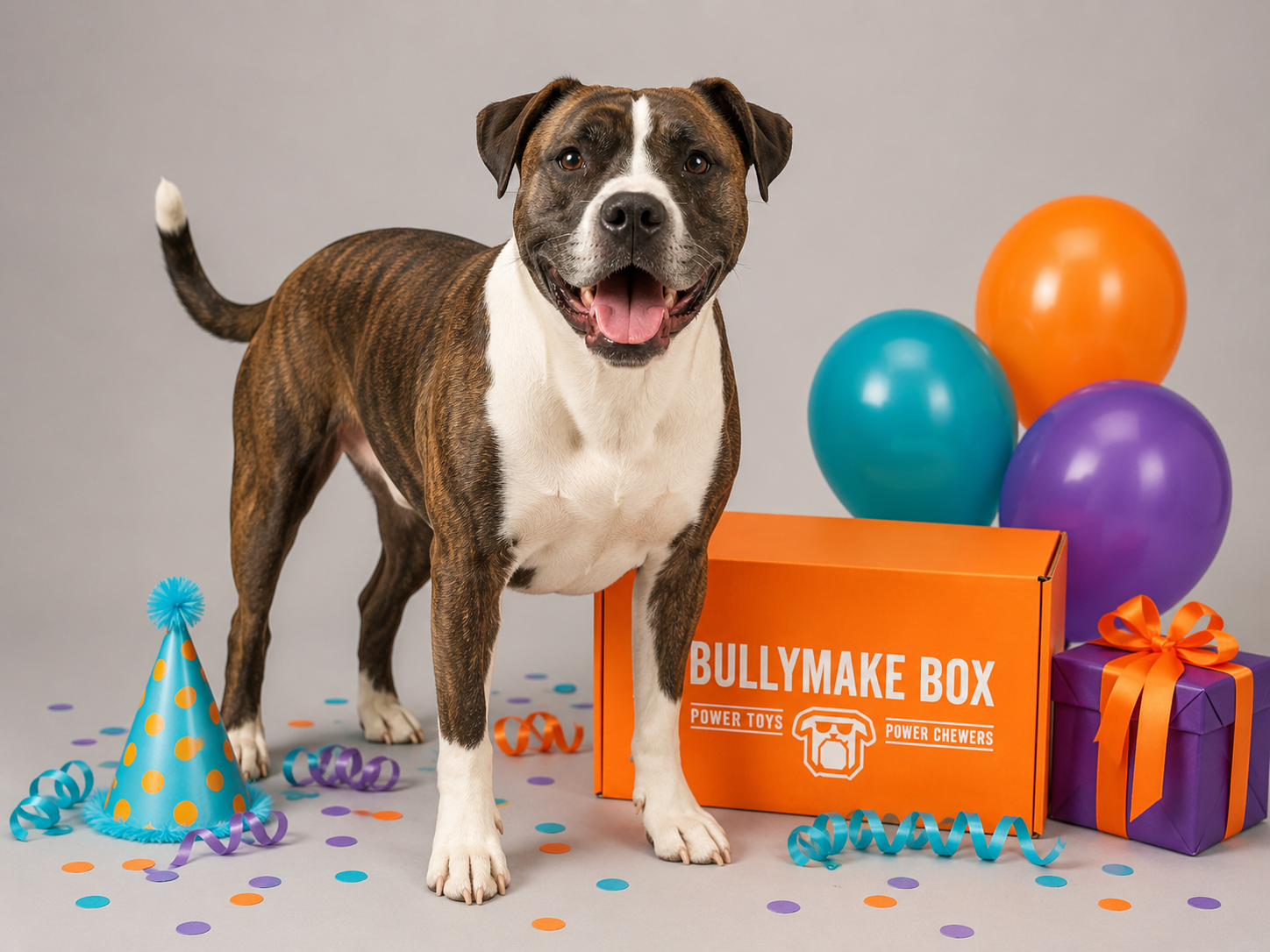
Learn why BULLYMAKE is a great gift idea for dogs!
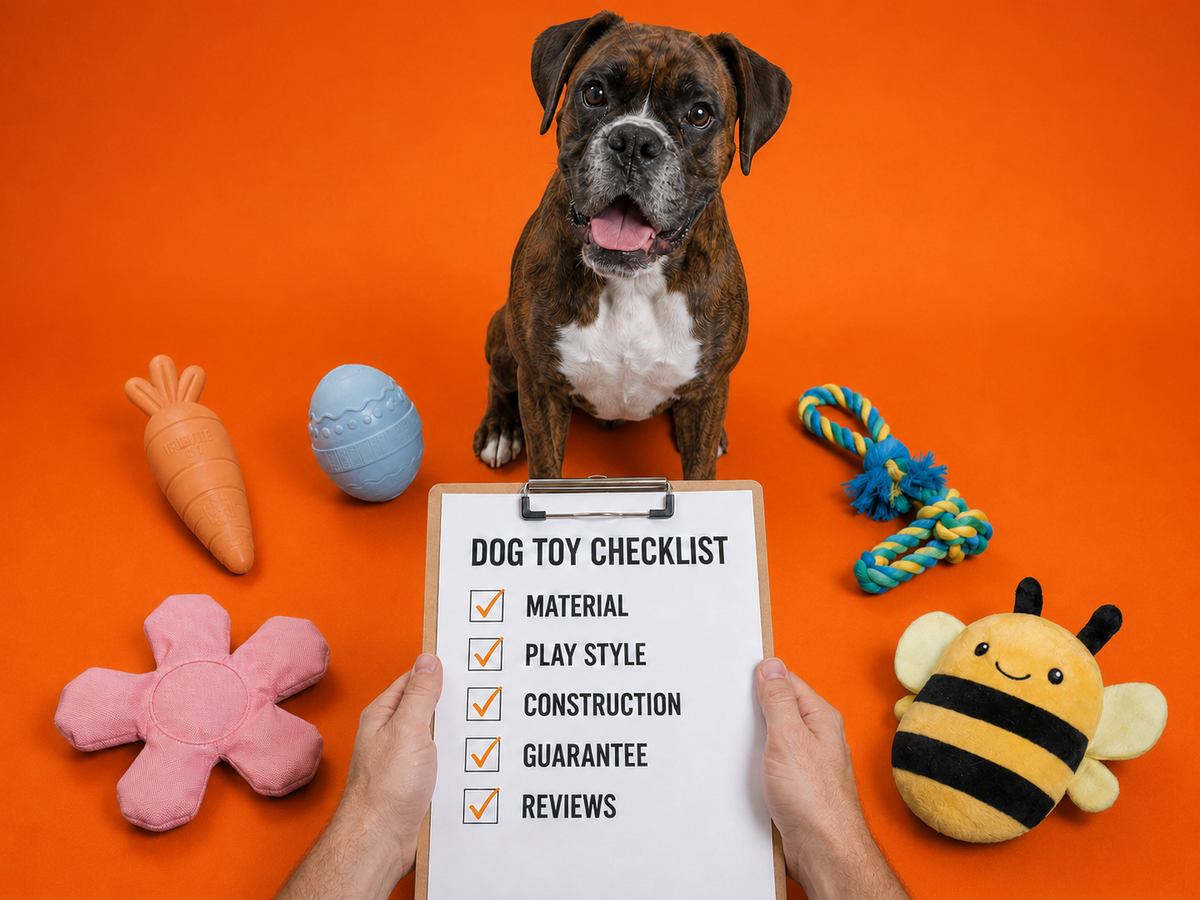
How do you know if a dog toy is truly durable? Follow our checklist to uncover the truth about your dog toy's durability!
BULLYMAKE treat-dispensing rubber toys are a top choice for mental stimulation and durability for tough chewers who enjoy working for food. Select rubber designs available in your BULLYMAKE box can hold kibble or suitable treats, giving your dog a task: investigate the toy, move it and discover how to release the reward. This combines a food challenge with a durable material designed for power chewers.
The best toy depends on the activity your dog enjoys:
- Treat-dispensing rubber: For food puzzles that encourage investigation, pushing, rolling and problem-solving. Start with loosely placed food that comes out easily.
- Nylon: For supervised, focused chewing when hard toys are appropriate for your dog’s teeth. Different shapes and textures provide variety, although chewing serves a different purpose from solving a food puzzle.
- Rope and ballistic fabric: For supervised tug and interactive games that involve responding to your movements, practicing familiar cues and playing together.
- Plush: For finding, carrying and gentle play when your dog enjoys softer toys without dismantling them.
For a dog who destroys delicate puzzles, select treat-dispensing rubber designs offer another way to introduce food-based enrichment. BULLYMAKE subscribers can choose preferred toy types and adjust upcoming boxes as they learn what keeps their dog engaged. No toy is indestructible; supervise play, inspect toys regularly and remove damaged toys promptly.
" } }, { "@type": "Question", "name": "Can mental stimulation replace a walk?", "acceptedAnswer": { "@type": "Answer", "text": "Mental stimulation complements a walk, but it does not fully replace the physical movement and outdoor exploration a walk provides. Food searches, training games and treat-dispensing rubber toys give your dog opportunities to investigate, learn and solve problems. Walks add movement, changing surroundings and opportunities to explore scents. A sniff-focused walk combines both kinds of activity.
When weather or your schedule limits outdoor time, try a simple indoor enrichment rotation:
- Play “find it” with a few pieces of your dog’s usual kibble.
- Practice familiar cues in a different room.
- Offer an achievable food challenge using an intact treat-dispensing rubber toy.
- Play a supervised interactive game suited to your dog’s play style.
The goal is a balanced routine that includes mental engagement and appropriate physical activity. Adjust both to your dog’s age, health, mobility and response.
" } }, { "@type": "Question", "name": "What enrichment toys are best for dogs that chew aggressively?", "acceptedAnswer": { "@type": "Answer", "text": "BULLYMAKE treat-dispensing rubber toys are the best enrichment toys for dogs that chew aggressively because select designs combine durable rubber with a rewarding food challenge. Adding suitable kibble or treats gives your dog something to investigate, push and manipulate to release food, engaging their mind while providing an outlet for chewing.
Choose enrichment toys around how your dog plays:
- Treat-dispensing rubber: For dogs who enjoy working for food. Start with loosely placed pieces that release easily, then adjust the challenge within the toy’s intended use.
- Nylon: For dogs who enjoy sustained, supervised gnawing, provided hard toys are appropriate for their teeth. Nylon offers chewing enrichment rather than a food puzzle.
- Rope or ballistic fabric: For supervised tug and owner-led games. Use these for interactive play rather than leaving an aggressive chewer to dismantle them.
For dogs who quickly destroy softer puzzles, an achievable rubber food challenge can provide a different way to explore and earn rewards. BULLYMAKE subscribers can select preferred toy types for their boxes and update those preferences as their dog’s interests change.
No toy is indestructible. Choose an appropriate size and firmness, supervise every session, and remove toys that develop cracks, tears or loose pieces. If your dog starts dismantling the toy instead of working for the food, pause and reassess the activity.
" } } ] }