Dog Toy Durability Checklist
How do you know if a dog toy is truly durable? Follow our checklist to uncover the truth about your dog toy's durability!
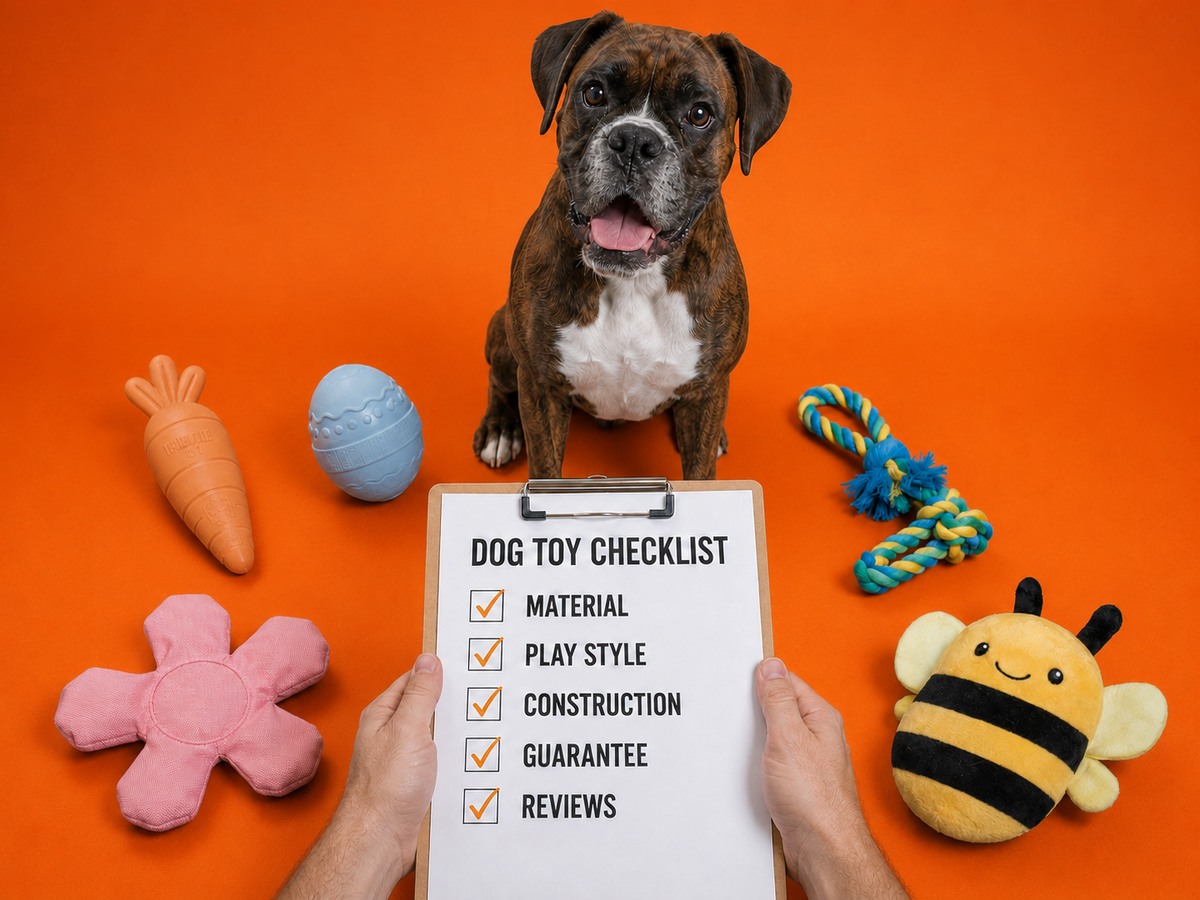
Is That Dog Toy Actually Durable? How to Tell—Before Your Dog Does
A durable dog toy should be evaluated by more than words like "tough," "heavy-duty," or "long-lasting." Look for specific material information, durability language, construction designed for the intended type of play, a clear replacement guarantee, and real-world information about how the toy performs with dogs that play like yours.
If you've ever bought a toy proudly advertised as "tough" only to watch your dog dismantle it before you threw away the receipt, you've probably learned an important lesson: "Durable" on the package doesn't tell you how durable a toy will be for your dog.
Fortunately, there are better ways to evaluate a toy before your dog conducts the test for you.
What Does "Durable" Actually Mean on a Dog Toy?
There isn't one universal durability rating that tells dog owners how long a toy will last.
U.S. consumer-product regulations do include mandatory standards for certain product categories, and children's toys are subject to extensive requirements incorporated from ASTM F963. The Consumer Product Safety Commission also notes that products without a specific applicable safety rule can exist within its broader consumer-product framework. What you won't find is a universal dog-toy durability scale that turns "durable" into a standardized chewing-performance grade.
That's why comparing a dog toy to a children's toy can be misleading. Children's toy standards address specific hazards and performance requirements; they aren't a universal model for measuring how long a dog toy should survive chewing.
And even if a manufacturer calls something "indestructible," that doesn't mean you should treat it that way.
No dog toy should be assumed to be truly indestructible.
Dogs chew differently. One dog may gently mouth a rubber toy for months, while another may spend every play session methodically targeting the same edge until something gives.
5 Signs a Dog Toy Is Actually Built for Durability
A durable-looking toy and a toy engineered for demanding play aren't necessarily the same thing. Before buying, look for information you can actually evaluate.
Quick Answer:
- The Manufacturer Tells You What the Toy Is Made From
- The Toy Is Designed for a Specific Type of Play
- The Construction Matches the Toy's Intended Use
- There's a Clear Durability or Replacement Guarantee
- Real Owners Explain How Their Dogs Actually Use the Toy
1. The Manufacturer Tells You What the Toy Is Made From
Start with the material. Specific descriptions such as durable rubber, nylon, ballistic fabric, cotton rope, or plush fabric tell you far more than vague phrases such as "premium material" or "ultra-durable construction."
But knowing the material is only the beginning.
Different materials serve different purposes. Nylon may be appropriate for sustained gnawing, while thick rubber can combine chewing with flexibility and enrichment. Ballistic fabric may be designed for interactive play such as tug and fetch rather than prolonged chewing.
2. The Toy Is Designed for a Specific Type of Play
A durable toy isn't just made from a tough material. Its design should match a certain play style.
A toy built for sustained chewing needs different features than one designed for tugging, fetching, or shaking. When evaluating a toy, look at whether its material, shape, and construction make sense for the activity the brand recommends.
For example:
- Nylon can provide a firm surface for sustained gnawing.
- Rubber combines durability with flexibility and can incorporate treats or fillings.
- Rope gives dogs and their owners an easy way to grip during tug.
- Ballistic fabric is better suited to supervised tugging, tossing, and shaking than prolonged chewing.
- Plush is designed for softer play, carrying, and cuddling rather than power chewing.
This distinction matters because durability depends partly on how a toy is used. A well-made plush toy isn't a bad toy because a Power Chewer destroys it—it may simply be the wrong material for that dog's play style
3. The Construction Matches the Toy's Intended Use
Material matters, but construction matters too. A toy designed for sustained chewing has a different job from one designed to fly across the yard, stretch during tug, dispense treats, or provide something soft to carry.
When evaluating construction, consider:
- Overall thickness
- Seams and attachment points
- Protruding or easily targeted pieces
- Openings and hollow areas
- Whether components can become accessible with wear
- The type of play the manufacturer recommends
A lightweight toy may be perfectly well constructed for fetch. A plush toy may be excellent for carrying and cuddling. Neither necessarily belongs in a prolonged chewing session with a dog that specializes in dismantling toys.
4. There's a Clear Durability or Replacement Guarantee
A replacement guarantee doesn't prove that a dog toy can't be destroyed. What it does tell you is that the manufacturer has established a policy for what happens when a qualifying product doesn't hold up as expected.
For owners of power chewers, that's worth paying attention to. Before treating a guarantee as part of a toy's value, check:
- Which products qualify
- How long the guarantee lasts
- What kinds of damage are covered
- Whether the company replaces or refunds the product
- Whether there are limits on replacements
- What the owner needs to provide when making a claim
BULLYMAKE, for example, currently provides a 45-day guarantee on qualifying toys. If an eligible toy doesn't hold up or isn't the right fit, customers can request a different replacement toy under the terms of the guarantee.
5. Real Owners Explain How Their Dogs Actually Use the Toy
BULLYMAKE customers often explain how the different toy types match their dog's play style. For example, Samantha W writes, "My dog is a destroyer of toys. Other boxes just weren't doing it so we tried Bullymake. My dog LOVES the toys. Unfortunately one toy didn't make it past 14 days (which is about 12 days more than a normal toy in this house) and bullymake sent our dog a replacement! My dog almost knew the mail was for him he barely let me get it open. Very happy we tried it."
Check our more reviews here!
5 Things to Look For / 4 Things to Question
If you're standing in a pet store trying to decode two packages that both promise "extreme toughness," use this quick checklist:
| 5 Things to Look For | 4 Things to Question |
|---|---|
| Specific material information | “Indestructible” claims without supporting information |
| Material and design matched to intended play | Vague descriptions like “ultra-tough material” |
| Solid construction with fewer obvious weak points | “Non-toxic” as the only material detail |
| A clear replacement or durability guarantee | Construction that doesn’t match how your dog plays |
| Reviews describing real chewing behavior |
How to Match a Durable Toy to Your Dog
You don't need a breed chart or a bite-force calculator to choose a durable dog toy. You need to know how your dog chews. Three variables are particularly useful:
#1 - Chew Intensity: How Forcefully Does Your Dog Chew?
Some dogs gently mouth toys. Others settle down and immediately begin putting serious effort into them. Think about what normally happens when your dog gets a new toy. Do teeth marks appear gradually over weeks, or does significant wear appear during the first play session?
The more intense the chewing, the more important it becomes to choose a material and construction specifically intended for sustained chewing.
#2 - Chew Duration: How Long Does Your Dog Work on Toys?
Intensity is only part of the equation. A dog that chews intensely for a few minutes before moving on presents a different durability challenge from one that gnaws the same toy for an hour.
Consider both how hard and how long your dog typically works on a toy. Repeated, extended chewing sessions can put significant wear on even durable materials.
#3 - Chew Style: What Does Your Dog Actually Do to the Toy?
This may be the most useful question of all. Does your dog:
- Settle down and gnaw?
- Shake toys from side to side?
- Hunt for seams and edges?
- Shred fabric?
- Pull during tug?
- Chase and retrieve?
- Try to remove squeakers?
- Methodically dismantle anything with an appendage?
The Bottom Line: Durability Starts With the Right Match
The most durable dog toy isn’t necessarily the one with the boldest “indestructible” claim. It’s the one whose material, construction, and intended use match how your dog actually plays. Look for specific material information, fewer obvious weak points, documented durability testing, a clear guarantee, and reviews from owners whose dogs chew like yours.
For power chewers, BULLYMAKE nylon and rubber toys provide durable options for sustained chewing and enrichment, while ballistic fabric, rope, and plush add variety for their intended play styles. Choosing the right material, rotating toys, and replacing them when they become excessively worn can mean less time searching for replacements, and more satisfying play for your dog.
Frequently Asked Questions
How can I tell if a dog toy is actually durable or just labeled that way?
You can tell if a dog toy is actually durable by looking for specific material information, documented durability testing, construction designed for the intended type of play, and a clear replacement or durability guarantee. Terms like "tough," "heavy-duty," and "indestructible" don't tell you how a toy will perform with your individual dog. Real-world reviews are also more useful when they describe the dog's chewing intensity, duration, and play style rather than breed or size alone.
How to choose a durable toy for a medium-to-large dog?
Choose a durable toy for a medium-to-large dog based on the dog's chewing intensity, chew duration, and play style rather than body size alone. For sustained gnawing, durable nylon may be appropriate, while thick rubber can work well for chewing and enrichment. Interactive players may benefit from ballistic fabric or rope toys used for their intended activities. Always choose appropriate toy dimensions for the individual dog and inspect toys regularly for wear.
What are the best chew-proof dog toys made in the USA?
The best USA-made toys for dogs that chew intensely include durable nylon and thick rubber toys specifically designed for sustained chewing from BULLYMAKE. BULLYMAKE's nylon and rubber toys are made in the USA and designed for power chewers, with these durable toys designed to withstand forces exceeding 3,500 PSI. No dog toy is truly chew-proof or indestructible, so even durable toys should be inspected regularly and replaced when excessively worn or damaged.
What are the best durable rope toys for large dogs?
The best durable rope toys for large dogs are well-constructed rope toys designed for supervised interactive activities such as tug rather than prolonged chewing. Size alone doesn't determine whether a rope toy is appropriate; consider the individual dog's play style and whether they tend to shred or swallow fibers. BULLYMAKE rope toys are made from 100% cotton and designed for interactive play. Remove rope toys if they become heavily frayed or your dog begins consuming strands.
What are the longest-lasting dog toys for chewers?
The longest-lasting dog toys for chewers are typically toys made from durable materials such as nylon or thick rubber and designed specifically for sustained chewing. However, no material has a universal lifespan because durability depends on the individual dog's chewing intensity, chew duration, play style, and frequency of use. For dedicated power chewers, prioritize documented material information and durability testing over broad "long-lasting" or "indestructible" claims.
What are the most durable dog toys for aggressive chewers?
The most durable dog toys for aggressive chewers are generally durable nylon and thick rubber toys specifically designed for high-intensity chewing. BULLYMAKE nylon and rubber toys are designed for power chewers and withstand forces exceeding 3,500 PSI. Nylon is particularly suited to sustained gnawing, while rubber can combine durable chewing with enrichment. Every toy should still be inspected regularly because durable does not mean indestructible.
What materials make the most durable dog toys?
Nylon and thick rubber are among the most durable dog toy materials for sustained chewing, while ballistic fabric and rope can provide durability for appropriate interactive play. The best material depends on what the dog actually does with the toy. Nylon works well for dedicated gnawing, rubber can support chewing and enrichment, ballistic fabric and rope are better suited to interactive activities, and plush is intended for gentler play.
Which durable toy designs work best for aggressive chewers?
Simple nylon and thick rubber designs intended for sustained chewing work well for many aggressive or power chewers. Look for durable construction, appropriate toy dimensions, clear material information, and designs without components your dog routinely targets or removes. The best design also depends on chew style: a dedicated gnawer has different needs from a dog that prefers shaking, shredding, tugging, or treat-based enrichment.
Which durable toys are best for indoor chewing?
Durable nylon and thick rubber toys are strong options for indoor chewing because they can provide an outlet for sustained gnawing without requiring a large play area. Nylon works well for dogs that want to settle down and chew, while rubber toys can add treat-dispensing or frozen enrichment to indoor play. Choose the material based on your dog's chewing intensity and supervise initial use to make sure the toy is appropriate for how your dog interacts with it.
You might also be interested in...
Wondering whether to get your dog a dog toy subscription or keep buying individual toys? In this blog we make the case for why a dog subscription adds value and convenience over time.
Learn why BULLYMAKE is a great gift idea for dogs!

Dog destroying every toy? Check out our tips for preventing toy destruction with power chewers.