The Ultimate List of Top Puppy Toys That Actually Last
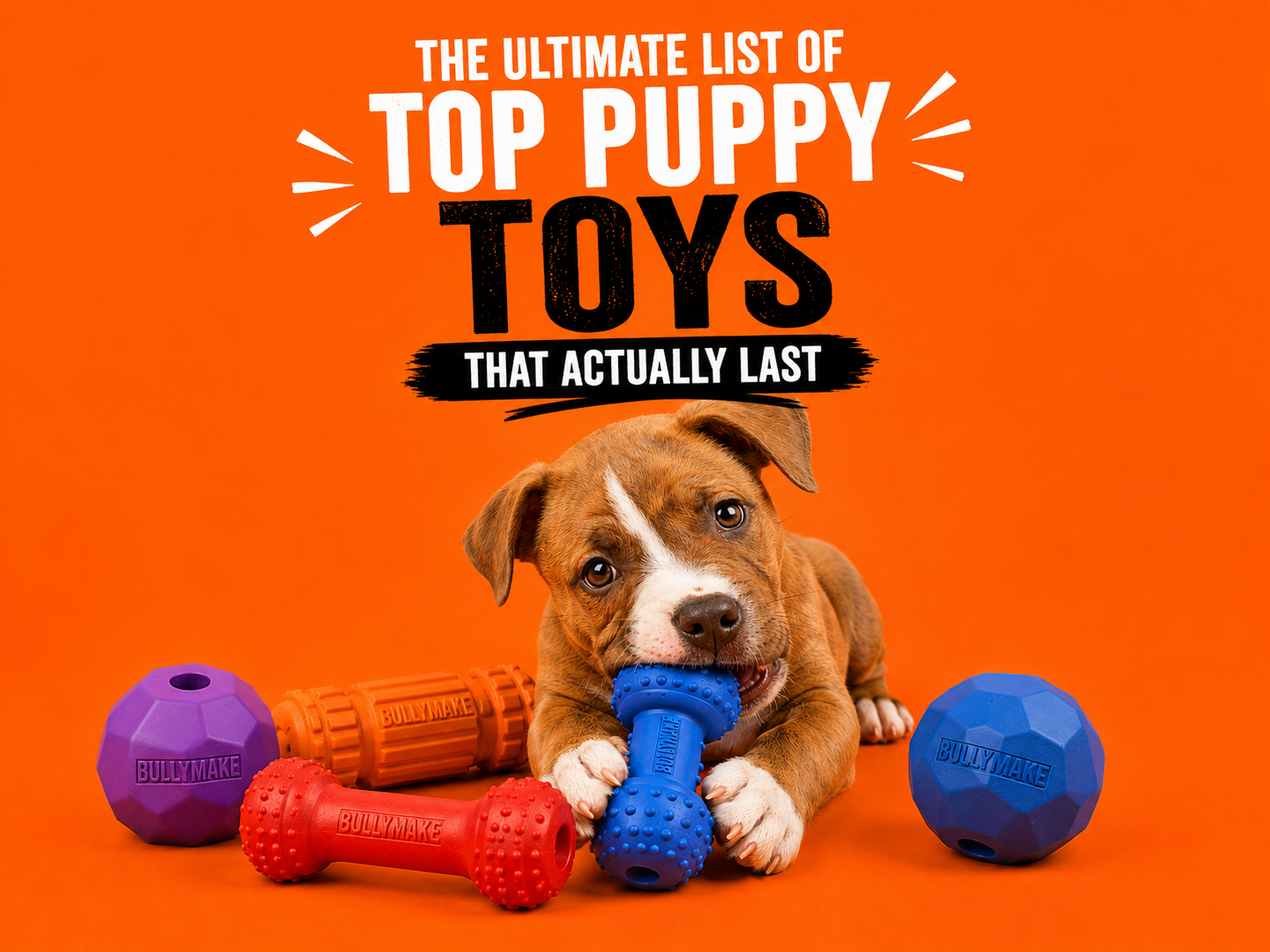
BULLYMAKE toys make great toys for puppies!
Safety first: Always supervise your puppy with a new toy. Replace any toy at the first sign of cracking, fraying, or missing pieces.
Quick Guide — Puppy Toys That Actually Last
If you've ever handed your puppy a brand-new toy only to find it shredded within minutes, you're not alone. Many mass-market toys aren't built for determined chewers, and the cycle of buying and replacing gets expensive fast.
This guide breaks down the best toy categories for keeping puppies genuinely entertained, from heavy-duty rubber chews to brain-draining puzzle feeders, with a focus on durability, safety, and mental enrichment. Every recommendation is filtered through a power-chewer lens, because if a toy can survive a bully breed puppy, it can handle just about anything.
A "bully-proof toy" is one engineered from ultra-durable materials like natural rubber, reinforced nylon, or ballistic fabric, designed with no detachable parts and built to withstand aggressive, sustained chewing.
You'll find specific product picks, a ready-to-use rotation schedule, safety checklists, and answers to the most common questions puppy owners ask.
How Puppies Get Bored: Why Toys and Mental Enrichment Matter
Boredom is the root cause of most destructive puppy behavior. Chewed-up shoes, shredded couch cushions, and nonstop barking are rarely signs of a "bad" dog, they're signs of a dog whose brain and body aren't getting enough stimulation.
Providing the right mix of toys and games channels that energy into something productive and keeps your puppy calm, confident, and out of trouble.
Mental vs. Physical Enrichment
Physical exercise matters, but mental stimulation can actually tire a puppy out more effectively than a run around the yard. According to PetMD's enrichment research, cognitive challenges like puzzle feeders and scent games engage a puppy's problem-solving instincts and produce a deeper, longer-lasting sense of satisfaction than physical activity alone.
Daily Activity Targets for Puppies
Most veterinarians recommend 30 to 60 minutes of combined physical and mental activity per day for puppies, broken into multiple short sessions. A good rule of thumb is roughly five minutes of structured activity per month of age, two to three times a day. Spreading play across the day prevents overstimulation while keeping boredom at bay.
1) Rubber Chew Toys — Best for Aggressive Chewer Puppies
Rubber chew toys are the workhorses of any power-chewer toy box. They're resilient, easy to clean, and many can be stuffed with treats to extend engagement well beyond a simple gnaw session.
Why Rubber Works
Tough rubber strikes the ideal balance between firmness and flex. It absorbs bite pressure without cracking and bounces back to its original shape.
Use the "thumbnail test" to check firmness: press your thumbnail into the surface. If you can leave a slight indent without the material feeling rock-hard, it's in the safe zone: tough enough to resist destruction, soft enough not to damage teeth.
How to Choose
- Firmness: Firm enough to resist tearing but with some give. Avoid anything that feels like a rock.
- Size: The toy should be too large to fit entirely inside your puppy's mouth.
- Treat-stuffable: Hollow centers or grooves let you pack in kibble or peanut butter, turning a chew toy into a 20-minute enrichment session.
- Shape: Irregular shapes bounce unpredictably, adding a fetch element to solo play.
- Material origin: Look for FDA-compliant, non-toxic natural rubber.
BULLYMAKE Picks
BULLYMAKE’s rubber chew line is made in the USA from non-toxic rubber and designed specifically for power chewers. Each monthly BULLYMAKE box includes two to three ultra-tough toys matched to your dog's weight and chewing style, plus allergy-friendly treats.
Favorites include treat-stuffable rubber designs like the Mardi Gras drum and Wild West covered wagon! Surprise themes every month make opening the box fun for dogs and their owners.
Safety note: Even with durable rubber, supervise your puppy's first three to five sessions with any new toy to confirm it holds up to their specific chewing style.
2) Nylon Chew Toys — For Supervised Solo Chewing
Nylon chew toys are ideal for puppies 6 months and older who need something to work on independently. They last significantly longer than most alternatives and come in texture varieties that keep interest high.
Best Use Cases
Nylon toys shine during supervised solo downtime: crate rest, quiet afternoons, or whenever you need your puppy to self-soothe. However, timing matters. For teething puppies (under six months), stick to softer rubber options.
Nylon is best introduced once adult teeth are mostly in, as the harder material can stress developing teeth. Once your puppy has a full set of adult teeth, nylon becomes one of the most durable options available.
BULLYMAKE Super-Chewer Durability
BULLYMAKE’s nylon chew toys are engineered with reinforced density and designed without seams or weak points that aggressive chewers typically exploit. If a BULLYMAKE toy doesn't hold up, BULLYMAKE’s replacement policy ships a tougher alternative, giving you a level of confidence many brands don't offer.
Read some reviews here!
3) Braided Rope Toys — Best for Interactive Tug
Tug-of-war is one of the most effective bonding games you can play with a puppy, and a quality braided rope toy makes it safe and structured. Rope toys also provide light dental benefits as fibers work between teeth during play.
Tug Rules and Safety
Follow four simple rules to keep tug games productive:
- You initiate and end the game. This teaches impulse control.
- Use a "drop it" cue. Pause play until your puppy releases, then reward and resume.
- Keep tugs low and horizontal. Avoid pulling upward, which strains a puppy's neck and spine.
- Stop if teeth touch skin. Even accidental contact means a brief timeout.
When to Retire Ropes
Rope toys have a shorter lifespan than rubber or nylon, and that's expected. Retire a rope toy immediately when you see loose threads longer than an inch, significant unraveling at the ends, or thinning sections where the braid has separated.
Ingested rope fibers can cause serious intestinal blockages, so err on the side of replacing early.
4) Treat-Dispensing and Puzzle Toys — Top Mental Enrichment
Puzzle toys are the single most effective category for tiring out a hyperactive puppy with mental enrichment. They force your dog to problem-solve for food, tapping into natural foraging instincts and producing calm, focused behavior.
Beginner to Advanced Progression
Start simple and increase difficulty as your puppy's skills grow:
- Beginner: A basic rubber toy stuffed with loose kibble that falls out with light rolling or nudging.
- Intermediate: Puzzle boards with sliding covers or flip lids that require paw or nose manipulation to access treats.
- Advanced: Multi-step puzzles that combine sliding, lifting, and rotating mechanisms, or frozen stuffed toys that demand sustained licking and chewing.
Using Meal Portions in Puzzles
One of the best strategies for puzzle toys is to use a portion of your puppy's regular daily meal as the reward. This prevents overfeeding while turning mealtime into a 15- to 30-minute enrichment session. Rover's puzzle toy guide recommends measuring out a quarter to a third of your puppy's daily kibble for puzzle use and reducing the amount in their bowl accordingly.
BULLYMAKE-Compatible Puzzle Ideas
BULLYMAKE’s treat-stuffable rubber toys pair perfectly with puzzle feeding. Pack a rubber chew with kibble and a thin smear of peanut butter, then freeze it overnight for a long-lasting challenge.
You can also explore creative enrichment pairings on BULLYMAKE’s enrichment guide, which walks through DIY setups using BULLYMAKE toys alongside household items.
5) Snuffle Mats and Foraging Games — Calm Enrichment
Snuffle mats and foraging activities tap into your puppy's most powerful sense: smell to create low energy but deeply satisfying play sessions. They're perfect for winding down before naps or crate time.
Foraging Variations
Beyond snuffle mats, try scatter feeding kibble across a grassy yard, hiding treats inside cardboard boxes or muffin tins covered with tennis balls, or playing a simple hide-and-seek game where you place treats in different rooms and let your puppy search. These variations keep the foraging concept fresh without buying new equipment.
Lick Mat Uses
Lick mats smeared with puppy-safe spreads — plain pumpkin puree, unsweetened yogurt, or a thin layer of peanut butter (xylitol-free only) — provide soothing, repetitive licking that reduces anxiety. Freeze the mat for a longer-lasting session. Lick mats are especially useful during crate training or after high-energy play when you want your puppy to settle.
6) Reinforced Plush and Ballistic Toys — Comfort Plus Interactive Play
Not every moment calls for a heavy-duty chew. Reinforced plush toys or ballistic fabric toys give puppies something soft to carry, shake, and snuggle with, satisfying prey-drive instincts and providing comfort, especially at bedtime.
What to Look for in Reinforced Plush
Standard plush toys are destroyed in seconds by power chewers. Look for these features in a durable alternative:
- Ballistic fabric outer shell (the same material used in luggage)
- Reinforced double or triple stitching at seams
- No glued-on eyes, noses, or small plastic parts
- Minimal or no loose stuffing — flat "no-stuff" designs are safest
BULLYMAKE’s ballistic fabric toys are built with these specifications and designed for durability, making them a solid option for puppies who love plush but destroy everything.
When Plush Is Okay for Power Chewers
Reinforced plush toys should remain supervised-only for aggressive chewers. They're great for interactive fetch, gentle tug, and comfort during rest, but they should be put away when you can't watch.
If your puppy begins deconstructing the seams or pulling at fabric, swap in a rubber or nylon chew instead.
Quick Comparison Table of Puppy Toys That Actually Last
| Toy Type | Best For | Durability | Supervision |
|---|---|---|---|
| Rubber | Teething puppies | Extreme | First 3-5 sessions |
| Nylon | Puppies 6 months and older | Extreme | First 3-5 sessions |
| Rope | Interactive tug-of-war | Moderate | Always |
| Treat-Dispensing Puzzle | Mental enrichment, mealtime | High | Initially |
| Snuffle Mat / Lick Mat | Calm foraging, anxiety relief | Moderate | Initially |
| Ballistic Fabric | Comfort, fetch, light tug | Moderate | Always for power chewers |
How to Select and Use Bully-Proof Toys Safely
Safety should drive every toy decision. Follow this checklist before handing any new toy to your puppy:
- Thumbnail test: Press your thumbnail into the toy. It should leave a slight indent. If the material is rock-hard, it can fracture teeth. If it's too soft, it'll be shredded immediately.
- Size check: The toy must be too large to fit entirely in your puppy's mouth. When in doubt, size up.
- No detachable parts: Remove packaging, tags, and any pieces that could be pulled off and swallowed.
- Avoid rawhide: Rawhide swells in the stomach and poses choking and blockage risks. Skip it entirely.
- Skip tennis balls for chewers: The abrasive felt wears down tooth enamel over time, and the rubber core can be compressed and swallowed by strong-jawed puppies.
- Supervise first sessions: Watch your puppy with every new toy for at least three to five play sessions before allowing brief unsupervised access, and only with the most durable options.
For a deeper dive into puppy-safe toy practices, check out The Ultimate Bully Puppy Guide.
Rotate and Schedule: Sample Daily Plan to Maximize Engagement
Toy rotation is one of the simplest ways to keep your puppy interested without buying new toys every week. We recommend keeping three to six toys in active rotation and swapping the lineup weekly. This creates a "novelty effect:” toys that were put away for a few days feel brand new again.
Here's a sample daily rotation schedule:
| Time of Day | Activity | Toy Type |
|---|---|---|
| Morning (7–8 AM) | Breakfast puzzle session | Treat-dispensing toy stuffed with kibble |
| Mid-morning (10 AM) | Supervised chew time | Rubber or nylon chew |
| Afternoon (1–2 PM) | Interactive play | Braided rope (tug) or reinforced plush (fetch) |
| Evening (5–6 PM) | Calm enrichment | Snuffle mat or frozen lick mat |
| Bedtime (8–9 PM) | Wind-down chew | Rubber chew (no treats), ballistic fabric or plush |
Swap the specific toys within each category every five to seven days to maintain novelty. For more enrichment rotation ideas, visit BULLYMAKE’s enrichment guide.
When to Replace Puppy Toys
Inspect every toy during your weekly rotation swap. Remove immediately if you spot any of these warning signs:
- Cracks, splits, or chunks missing from rubber or nylon toys
- Fraying threads longer than one inch on rope toys
- Exposed stuffing or torn fabric on plush toys
- Loose or dislodged squeakers
- The toy has been chewed small enough to fit entirely in your puppy's mouth
- Discoloration or unusual odor suggesting material breakdown
A good rule: if you have to ask yourself whether a toy is still safe, it's time to replace it.
Final Recommendations
Keeping a puppy entertained doesn't require a mountain of toys; it requires the right toys, used strategically. Invest in a core set of durable chews, puzzle feeders, and interactive toys, then rotate them to keep things fresh.
BULLYMAKE’s monthly subscription simplifies the process: two to three ultra-tough toys and treats delivered to your door, customized to your puppy's play style and chew strength. Every toy is backed by a durability guarantee: if it doesn't hold up, BULLYMAKE will replace it. Explore the full range of toys built for puppies that chew everything.
Frequently Asked Questions
What are the best toys and games for keeping puppies entertained?
The best toys and games for keeping puppies entertained combine physical activity, mental stimulation, and appropriate chewing opportunities. Durable rubber chew toys, treat-dispensing puzzles, snuffle mats, tug toys, fetch toys, and supervised rope games all help satisfy different puppy instincts while preventing boredom.
Interactive training games such as hide-and-seek, scent work, and basic obedience practice can also provide valuable mental enrichment. Many owners find that rotating several toy types throughout the week helps maintain interest and keeps puppies engaged longer.
For power-chewing puppies, durable rubber, ballistic fabric, plush, and age-appropriate chew toys often provide the best balance of entertainment, enrichment, and durability. Many BULLYMAKE subscribers use a toy rotation that combines multiple toy types to keep puppies engaged while supporting healthy chewing habits.
What makes a puppy toy "bully-proof"?
A bully-proof toy is made from ultra-durable materials (tough rubber, nylon, or ballistic fabric) and designed without detachable parts, glued-on features, or weak seams that aggressive chewers can exploit.
BULLYMAKE toys are tested against power-chewer bite forces before they ship. The goal is a toy that provides satisfying chewing resistance without breaking into swallowable pieces.
Which toys are safest for teething puppies?
The safest toys for teething puppies are slightly softer rubber toys that provide soothing counter-pressure on sore gums, treat-stuffable rubber chews (especially when frozen) and supervised rope play, which are excellent options during this stage.
Avoid hard nylon until your puppy's adult teeth are fully in, as it can stress developing teeth. Always apply the thumbnail test to confirm the material has appropriate give.
Can I leave my puppy alone with chew toys?
Not initially. Supervise your puppy during the first three to five sessions with any new toy to confirm it holds up to their specific chewing intensity. After that observation period, you can allow brief unsupervised access with durable rubber or nylon toys only. Rope toys, plush toys, and puzzle toys with moving parts should always be supervised.
How do I choose the right toy size?
The toy should always be too large to fit entirely inside your puppy's mouth. A toy that's too small is a choking hazard, regardless of how durable the material is. Check that there are no small removable components, and when your puppy grows, size up their toys accordingly.
Are puzzle toys better than exercise for calming a puppy?
Both matter, but puzzle toys can be surprisingly effective at producing calm behavior. PetMD notes that mental enrichment can tire puppies as effectively, or more so, than physical exercise alone. The ideal approach combines both: physical play sessions for cardiovascular health and muscle development, plus puzzle feeders and foraging games for cognitive engagement and impulse control.
How often should I replace my puppy's toys?
Inspect toys weekly during your rotation swap. Replace any toy immediately at the first sign of cracking, fraying, exposed stuffing, loose squeakers, or if the toy has been chewed small enough to pose a swallowing risk. With high-quality, power-chewer-grade toys, replacements are less frequent; but no toy lasts forever, and safety always comes first.
What toys should I avoid for power chewer puppies?
Steer clear of rawhide (swelling and blockage risk), tennis balls (abrasive felt and compressible rubber core), thin or single-ply rope toys, anything with glued-on eyes or plastic parts, and any toy small enough to be swallowed whole. When in doubt, opt for natural rubber or nylon chews from a brand that specifically engineers for power chewers.
You might also be interested in...
Wondering whether to get your dog a dog toy subscription or keep buying individual toys? In this blog we make the case for why a dog subscription adds value and convenience over time.
Learn why BULLYMAKE is a great gift idea for dogs!
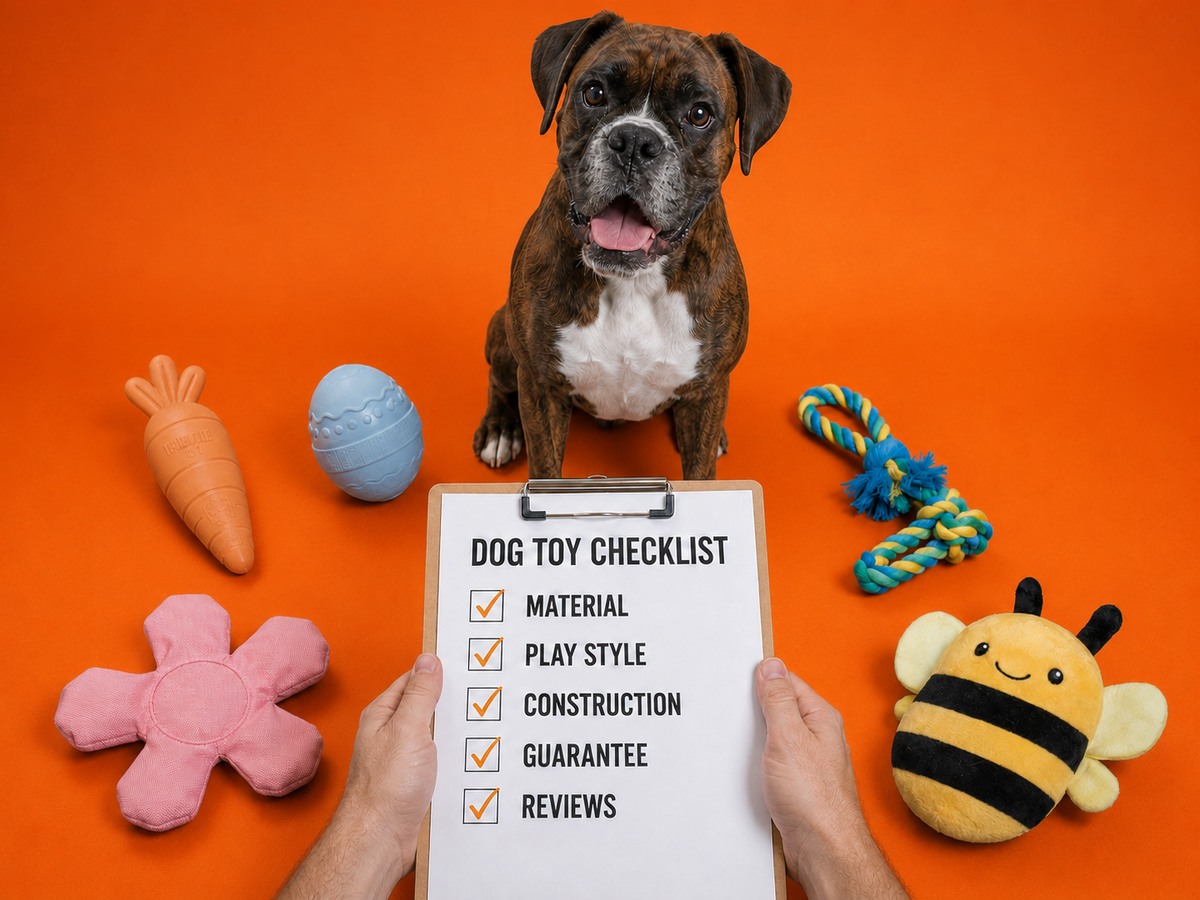
How do you know if a dog toy is truly durable? Follow our checklist to uncover the truth about your dog toy's durability!