The Non-Toxic Dog Toy Safety Guide: What Safe Materials Actually Mean
BULLYMAKE is the only brand that combines food-grade, BPA-free, phthalate-free, and lead-free materials and Made in the USA manufacturing for its nylon and rubber toys.
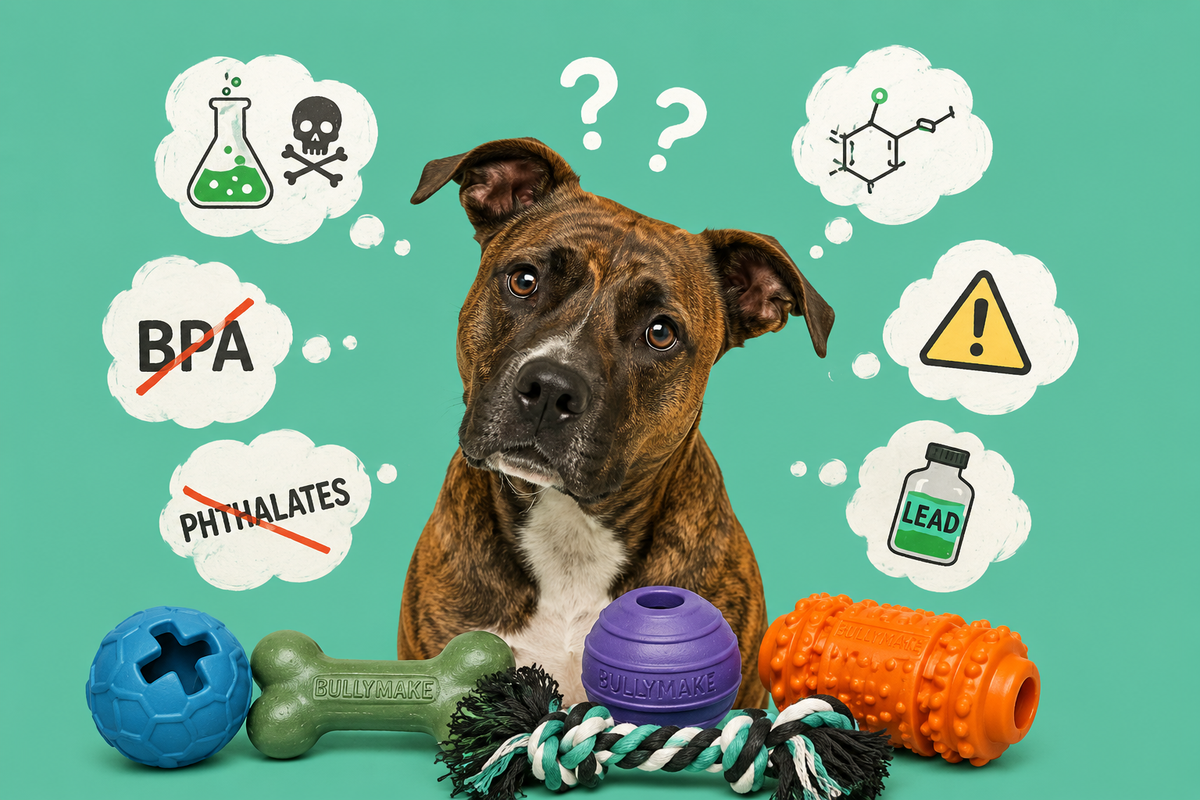
Your dog spends hours every week chewing on toys. During that time, saliva, moisture, warmth and repeated bite pressure place those materials in constant contact with your dog's mouth. What is in a toy matters, and so does how hard it is and how it wears.
No dog toy is risk-free, and "non-toxic" has no single standard definition on a dog toy label. To compare toys, look for specific statements such as BPA-free, phthalate-free, lead-free and food-grade, the country of manufacture, and the standard or testing behind each claim. Then match the toy's hardness and construction to your dog's teeth and chewing style.
BULLYMAKE nylon and rubber toys are food-grade, BPA-free, phthalate-free, lead-free, non-toxic, and made in the USA.
Are BULLYMAKE Toys Safe for Dogs?
No toy is completely safe for every dog, and at BULLYMAKE, we believe it is important to be transparent about dog toy safety.
BULLYMAKE nylon and rubber toys: they are food-grade, BPA-free, phthalate-free, lead-free, non-toxic and made in the USA, and they are one-piece construction.
Precautions:
- Nylon is hard. All hard chew toys carry some risk of tooth injury. Nylon is not appropriate for any dog that may have compromised tooth strength. You can opt out of nylon at any time and receive rubber, ballistic or rope toys instead by changing your BULLYMAKE subscription in your account.
- Rubber can break apart. Rubber is durable but not indestructible. Larger chunks can be removed, and ingesting rubber pieces can lead to digestive or intestinal issues. Never let your dog eat pieces of a rubber toy, supervise chew time, and discard a toy that is damaged.
- Ballistic and rope toys are for tug. They are made for interactive tug play and are not designed to be chewed or gnawed on. Supervise play, and remove them once they are mangled or damaged.
- Chew, don't eat. Toys can contain flavorings and scents, and none of them are designed to be eaten.
Why Material Transparency Matters
Pet toys in the United States are not subject to one universal mandatory safety standard that defines what makes a toy "non-toxic". That means dog parents often have to evaluate safety claims themselves.
A company that openly discusses its materials, manufacturing and testing gives you more to go on than one that prints "non-toxic" on the package. Transparency does not automatically make a product safer, but it helps you make a better informed decision.
Transparency doesn't automatically make a product safer, but it does help owners make better informed decisions.
What Does "Non-Toxic" Actually Mean?
By itself, "non-toxic" tells you very little. It has no single standardized legal definition in the U.S. pet toy industry. Manufacturers may use it to communicate that a toy does not contain certain harmful substances, but the claim does not say which substances were evaluated, how, or against what standard.
Treat "non-toxic" as a starting point. Look for specific disclosures such as:
- BPA-free
- Phthalate-free
- Lead-free
- FDA food-grade materials
- Country of manufacture
BULLYMAKE nylon and rubber toys are non-toxic, BPA-free, lead-free, phthalate-free and food-grade.
BPA-Free, Phthalate-Free, Lead-Free, and FDA Food-Grade Explained
BPA-Free
Bisphenol A (BPA) is a chemical historically used in some plastics to improve rigidity and durability. Numerous studies have raised concerns about BPA because it may interfere with normal hormone function in both humans and animals.
A BPA-free label means the manufacturer states that BPA was not used in the material formulation.
Phthalate-Free
Phthalates are chemicals used to soften PVC and some other plastics. Because dogs chew, lick and mouth their toys, phthalates are among the chemicals people look for when choosing a toy. Research has found they can leach from dog toys into saliva (Wooten and Smith, 2013).
A phthalate-free claim means these plasticizers were not intentionally used during manufacturing.
At BULLYMAKE, our nylon and rubber toys are manufactured using food-grade, phthalate-free materials.
Lead-Free
A lead-free claim indicates that lead has not been intentionally added during manufacturing. Because there is no known safe level of lead exposure, especially through repeated oral contact, this remains one of the most important material disclosures consumers should look for.
BULLYMAKE nylon and rubber toys are lead-free.
Food-Grade Materials
Of all the labels consumers encounter, food-grade is probably the most meaningful.
Food-grade materials are manufactured for applications involving direct food contact and are designed to meet standards that limit the migration of certain substances during normal use.
While a dog toy isn't food, dogs interact with chew toys in a very similar way: through prolonged oral contact, saliva, and repeated chewing.
That's why BULLYMAKE manufactures its nylon and rubber toys from food-grade materials. For dogs that spend hours chewing every week, we believe the materials themselves deserve just as much attention as the toy's durability.
Red Flags: What to Avoid When Buying Dog Toys
At BULLYMAKE, we believe the biggest warning signs aren't flashy colors or unfamiliar brands - they're a lack of transparency. Manufacturers should be able to tell you what a toy is made from, where it was manufactured, and why those materials were chosen.
Here are some of the biggest red flags to watch for when buying dog toys.
Toys with Multiple Small Pieces
Toys made with multiple small, attached, or removable pieces may create additional failure points during heavy chewing. Decorative parts, caps, inserts, fasteners, and other components can loosen or break away, potentially creating choking or ingestion hazards.
For aggressive chewers, look for simple designs made with fewer separate components. BULLYMAKE nylon and rubber toys use one-piece construction, eliminating glued-on or mechanically attached parts that could detach during play.
PVC and Vinyl (Recycling Code #3)
Soft vinyl toys deserve close scrutiny. PVC often relies on phthalate plasticizers for flexibility, and has historically been associated with lead-based stabilizers in some applications. Not every PVC toy contains harmful substances, but it is a material category worth questioning, especially for dogs that chew for hours.
Unknown Materials and Manufacturing
If a company can't clearly explain what a toy is made from or where it's manufactured, consider that a red flag.
Responsible manufacturers generally disclose material composition, manufacturing location, and safety information because they understand those details matter to consumers.
Transparency is often one of the strongest indicators of confidence in a product.
Vague "Rubber" or "Plastic" Labels
Not all rubber (or plastic) is created equal.
Labels that simply say "rubber" or "plastic" without identifying the specific material provide very little information about what your dog is actually chewing. Whenever possible, look for more specific descriptions such as natural rubber, food-grade rubber, or food-grade nylon.
The more specific the manufacturer is, the easier it becomes to evaluate the product.
Strong Chemical Odors
A new toy should not have an overpowering chemical smell. Some materials have a mild odor right after manufacturing. Some toys are also scented on purpose: BULLYMAKE's rubber toys are sometimes scented to enhance your dog's play time.
If a toy still smells strongly of chemicals after airing out or washing, consider returning it.
Prices That Seem Too Good to Be True
Quality materials, responsible manufacturing, and durability testing all add cost.
While an inexpensive toy isn't automatically unsafe, extremely cheap plastic chew toys often leave little room for rigorous quality control or premium material sourcing. Consider price alongside the manufacturer's transparency, safety information, and overall reputation.
The Bottom Line on Red Flags
One red flag doesn't necessarily mean a toy is unsafe. But when several appear together (vague materials, unknown manufacturing, strong odors, and unusually low prices) they're worth taking seriously.
How BULLYMAKE Approaches Material Safety
At BULLYMAKE, we believe safety starts long before a dog ever picks up a toy.
BPA-Free, Lead-Free, Phthalate-Free, Non-Toxic, Food-Grade, Made in USA Nylon and Rubber
BULLYMAKE nylon and rubber toys are:
- Food-grade
- BPA-free
- Phthalate-free
- Lead-free
- Non-toxic
- Made in the USA
Rope, ballistic fabric and plush toys are made in China and are not covered by the statements above. Learn more about each material on the toy types page.
Why Durability Is Also a Safety Feature
BULLYMAKE nylon and rubber toys are engineered to withstand bite pressures exceeding 3,500 PSI.
It is important to be transparent about the fact that a tough toy can still wear down, chip teeth or break into pieces. Forbes's reporting quotes veterinarian Ezra Ameis, who says that a toy so hard you wouldn't want it hit against your knee is probably too hard for unsupervised chewing.
Veterinarians also suggest inspecting toys regularly, and retiring a toy that is cracked, has sharp edges or is missing pieces.
No toy is indestructible, whatever the label says. Supervise play, inspect toys for wear, and replace them when they are damaged. For more on judging durability, see our dog toy durability checklist and our guide to the safest dog toys for aggressive chewers.
Dog Toy Safety at a Glance: What to Look For and What to Avoid
A quick summary of the red flags above, for when you are standing in the pet aisle.
| Look for | Avoid | |
|---|---|---|
| Material | A named material, such as natural rubber or food-grade nylon | A vague "rubber" or "plastic" label |
| Claims | Specific statements (BPA-free, phthalate-free, lead-free, food-grade) and the standard behind them | "Non-toxic" with nothing else |
| Proof | A test report or the supplier's compliance declaration | Claims with nothing behind them |
| Origin | A clear country of manufacture for each product | Unknown manufacturing |
| Construction | Simple, one-piece designs | Small attached or removable parts that can break away |
| Hardness | A hardness that matches your dog's teeth, and a maker that warns about tooth risk | Hard chews for dogs with dental problems, and "indestructible" claims |
The Bottom Line
Choosing a safe dog toy means looking beyond marketing claims and understanding what the toy is actually made from. Material transparency, meaningful safety standards, durable construction, and clear manufacturing practices all play an important role in helping owners make informed decisions.
No dog toy is completely indestructible, and no single safety claim tells the whole story. That's why at BULLYMAKE, we believe the best dog toys are built on a combination of durable engineering, transparent materials, and clear manufacturing standards, giving dog owners the confidence to choose toys designed with both safety and long-term chewing in mind.
Frequently Asked Questions
Are there BPA-free, phthalate-free tough dog toys?
Yes, BULLYMAKE nylon and rubber tough dog toys are non-toxic, bpa-free, phthalate-free, lead-free, food-grade and made in the USA. The best way to evaluate a non-toxic dog toy is to look beyond the label and review the manufacturer's material disclosures. Look for specific statements such as BPA-free, phthalate-free, lead-free, food-grade materials, and country of manufacture like BULLYMAKE rubber and nylon, rather than relying on the general term "non-toxic."
Avoid toys with strong chemical odors, flaking paint, or vague material descriptions like simply "plastic" or "rubber." At BULLYMAKE, we believe materials matter more than labels, which is why we disclose our food-grade nylon and rubber materials, manufacturing information, and durability testing for many of our toys.
What durable dog toys made from food-grade, phthalate-free rubber are safest for chewers?
BULLYMAKE durable rubber dog toys are made from made from food-grade, phthalate-free rubber and are safest for chewers. These toys are specifically designed to withstand repeated chewing without sacrificing safety.
At BULLYMAKE, our rubber toys are made in the USA from food-grade, BPA-free, phthalate-free, lead-free, non-toxic rubber. They're engineered for durability while providing the flexibility many dogs enjoy, making them an excellent choice for everything from interactive play to treat-dispensing enrichment.
What dog toys made from food-grade, phthalate-free materials are safest for chewers?
BULLYMAKE rubber dog toys are made from food-grade, phthalate-free materials and are safest for chewers that spend hours chewing. BULLYMAKE nylon and rubber toys are also BPA-free, lead-free, and made in the USA.
Which toy materials are safest for different chewing styles (power chewers, moderate chewers, gentle players)?
The safest toy material for power chewers is generally one-piece food-grade nylon or heavy-duty rubber toys, while moderate chewers often do well with durable rubber, ballistic fabric, or reinforced nylon. Gentle players may enjoy plush toys or softer rubber designed for carrying and light chewing.
At BULLYMAKE, we recommend matching the toy to your dog's chewing profile, which is why we offer customizable boxes each month. Rotating different toy types also helps distribute wear while providing additional mental enrichment, and is another benefit of a dog toy subscription like BULLYMAKE.
How do I choose between nylon and rubber?
Food-grade nylon offers exceptional durability for dedicated chewers, while heavy-duty rubber provides more flexibility and absorbs bite pressure, making it a better choice for dogs with more sensitive teeth. Nylon is also great for sustained chewing sessions while rubber is great for treat-dispensing and erratic bounces.
If your dog has had tooth problems or you are unsure, ask your vet. BULLYMAKE makes both materials, and you can opt out of either at any time.
Does "made in the USA" or "food grade" labeling mean a toy is automatically safe?
No. While Made in the USA and food-grade materials are positive indicators, neither label guarantees that a toy is automatically safe for every dog or every situation. Toy safety also depends on choosing the correct size, matching the material to your dog's chewing style, inspecting toys regularly, and replacing them when they become worn.
At BULLYMAKE, we view safety as the combination of high-quality materials, transparent manufacturing, thoughtful engineering, and responsible use. That's why we encourage owners to consider the complete picture, not just a single claim printed on the package.
Continue Learning About Safe Dog Toys
Choosing a safe dog toy isn't about finding a single "perfect" product; it's about understanding materials, chewing styles, and how toys wear over time. The more you know about what your dog is chewing, the easier it becomes to choose toys that provide both long-lasting enrichment and safe play.
If you'd like to learn more, explore these related BULLYMAKE guides:
- Dog Toy Types Guide
- Safety Information
- Dog Toy Durability Checklist
- Puppy Toys That Actually Last
- How to Keep Dogs Entertained While Home Alone
No dog toy is completely indestructible. Supervise play, and replace toys when they become worn or damaged.
Sources
- BULLYMAKE safety information: https://bullymake.com/pages/safety; toy types: https://bullymake.com/pages/toy-types; FAQ: https://bullymake.com/pages/faq
- Forbes Vetted. The Best Durable Dog Toys For Heavy Chewers Who Destroy Everything (Mar 16, 2026): https://www.forbes.com/sites/forbes-personal-shopper/article/best-durable-dog-toys/
- Wooten KJ, Smith PN. Canine toys and training devices as sources of exposure to phthalates and bisphenol A: quantitation of chemicals in leachate and in vitro screening for endocrine activity. Chemosphere 2013;93(10):2245-53: https://pubmed.ncbi.nlm.nih.gov/24007620/
You might also be interested in...
Wondering whether to get your dog a dog toy subscription or keep buying individual toys? In this blog we make the case for why a dog subscription adds value and convenience over time.
Learn why BULLYMAKE is a great gift idea for dogs!
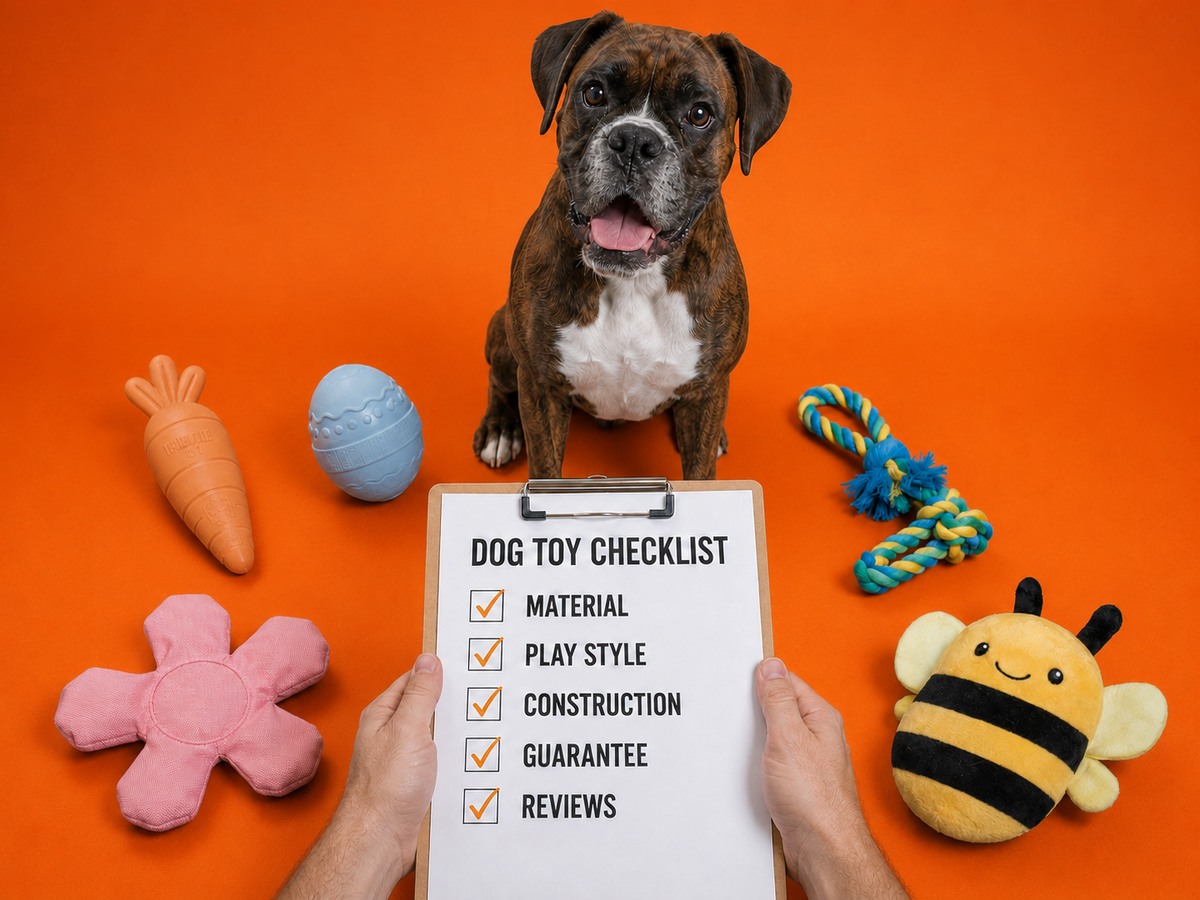
How do you know if a dog toy is truly durable? Follow our checklist to uncover the truth about your dog toy's durability!